
California is the epicenter for methamphetamine;
UC is a uniquely California institution to lead the response.
We are pleased to invite you to attend the UC Summit on Methamphetamine, hosted by the UC Riverside School of Medicine on Friday, April 17, 2026.
This day-long, hybrid symposium will convene faculty from all University of California campuses, alongside leaders in addiction medicine, clinicians, public health advocates, researchers, law enforcement partners, and policymakers. The primary focus of this event is to address the growing impact of methamphetamine use on individuals, families, and communities across the state of California. A central objective of the symposium is to strengthen cross-institutional collaboration and lay the foundation for developing a center of excellence dedicated to methamphetamine research, education, and innovative models of care.
Space may be limited, and we encourage early registration. Parking information will be shared with confirmed registrants prior to the event.
Conference Information
Date: Friday, April 17, 2026
Time: 8:00 am – 5:30 pm
Location: Education Building II Room 205
UC Riverside School of Medicine
900 University Avenue, Riverside, California
(Hybrid option available via Zoom)
Cost: Free to attend. Registration is recommended.
Registration Deadline: April 10, 2026
Poster Submission Deadline: March 27, 2026
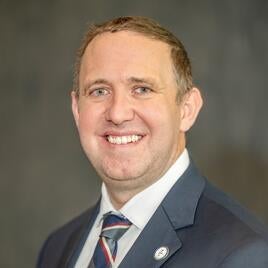
Keynote Speaker
Brian Hurley, MD, MBA, FAPA, DFASAM
Medical director of the Bureau of Substance Abuse Prevention and Control for the Los Angeles County Department of Public Health
Brian Hurley, MD, MBA, FAPA, DFASAM is an addiction physician and the medical director of the Bureau of Substance Abuse Prevention and Control for the Los Angeles County Department of Public Health. Brian currently serves as immediate past president of the American Society of Addiction Medicine. He has served on a variety of committees and councils at ASAM including originating ASAM's Motivational Interviewing Course and co-authoring the ASAM and AAAP National Practice Guideline on the Treatment of Stimulant Use Disorder.
Presentation: Treating Stimulant Use Disorder
Managing stimulant use disorder requires a patient-centered, evidence-based approach. This education is designed for healthcare professionals seeking to enhance their understanding of available treatments and build clinical skills for managing stimulant use disorder. Participants will gain a comprehensive overview of SUD and learn how to effectively engage and care for patients affected by stimulant use. This session will specifically address stimulant use prevention and stimulant use disorder diagnosis and treatment, including behavioral interventions, emerging pharmacologic options, and overdose prevention strategies.
Research Speakers
-
Michelle Anne Bholat, MD, MPH

Michelle Anne Bholat, MD, MPH
Professor and Chair of the Department of Family Medicine, UC Riverside School of Medicine
Michelle Bholat, MD, is a first gen Latina who climbed the health educational ladder from medical assistant to physician. She earned her MD from the University of California, Irvine, and after residency training, she graduated with an MSPH from the UCLA School of Public Health. Over her years she has held various leadership roles within academic medicine at Harbor-UCLA, an LA County safety net facility followed by 25 years of service at UCLA Health and the David Geffen School of Medicine. Early in her career at UCLA, the National Hispanic Medical Association Board selected her to serve as a fellow and she was recognized by the Smithsonian for contributions to the Hispanic workforce at an annual Smithsonian Exhibition “Changing the Face of Medicine. She is a fierce advocate for personal and public health equity and diversity and excellence in medical education to ensure delivery of high quality and safe patient care. From 2006 to 2024, she served as the executive vice chancellor for the Department of Family Medicine and executive director of the acclaimed UCLA International Medical Graduate Program that matched 180 bi-cultural/bi-lingual Spanish-speaking physicians in family medicine residency training programs in California. Her research interests along with physician workforce also include health science integration and she with other leaders led to top-tier fellowship programs in addiction, pain, and palliative medicine.
In November 2024, she joined the University of California, Riverside School of Medicine as chairwoman of the Department of Family Medicine and works closely with the executive leaders of UCR Health to develop a future residency training site aimed at caring for under-resourced populations mentor, Bholat integrates innovative approaches to primary care, addiction medicine, and health systems improvement, reflecting her lifelong commitment to advancing health equity and medical education.
Most recently, she received recognition for her research regarding the UCLA IMG Program and the program’s impact on California. She is currently collaborating with senior associate dean, a UCLA colleague and the other UCR health science chairs to deliver a UCR SOM conference to address the widespread use of methamphetamine in Inland Southern California this spring.
-
Jesse Clark, MD
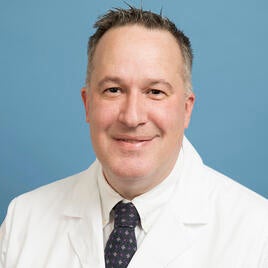
Jesse Clark, MD
Professor of Medicine & Infectious Disease Specialist at the University of California, Los Angeles (UCLA)
Jesse Clark, MD, is professor-in-residence in the Department of Medicine, Division of Infectious Diseases and the Department of Family Medicine at the UCLA Geffen School of Medicine.
His research addresses the intersection of HIV, STIs, and substance use among men who have sex with men (MSM) and transwomen (TW) in the US and Latin America. In Peru, Clark’s work has explored the application of new diagnostic and prevention technologies to the social and sexual networks of MSM and TW as a tool to integrate HIV and STI prevention, including studies of partner notification and treatment by MSM diagnosed with an STI, and efforts to promote PrEP uptake and adherence among TW. In Los Angeles, he is Medical Director for UCLA’s Vine Street Clinic where he leads studies for the HIV Prevention Trials Network, the HIV Vaccine Trials Network, and the NIDA Clinical Trials Network. His recent work explores integrated strategies to combine substance use harm reduction with HIV prevention among stimulant-using MSM.
His presentation will address the social phenomenon of "chemsex," with an emphasis on how the intersection of substance use and sexuality present unique risks for HIV transmission in the networks of stimulant-using MSM. We will then explore strategies to recognize and manage these risks through integrated harm reduction-HIV prevention strategies.
-
Lisa R. Fortuna, MD, MPH
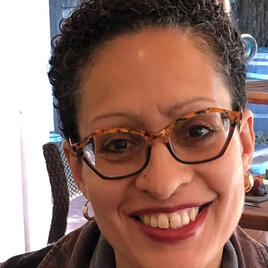
Lisa R. Fortuna, MD, MPH
Professor and Chair of the Department of Psychiatry and Neurosciences at the University of California Riverside, School of Medicine
Lisa Fortuna, MD, MPH, MDiv is professor and chair of the Department of Psychiatry & Neurosciences at the UC Riverside School of Medicine. A child and adolescent psychiatrist and leader in addiction and community psychiatry, Fortuna’s work focuses on substance use disorders, with particular attention to the impact on youth, families, and underserved communities. She has led innovative efforts in substance use education, early intervention, and workforce development, including implementation of integrated, culturally responsive models of care across clinical and community settings. Her work emphasizes the intersection of addiction, trauma, and structural inequities, and the need for coordinated, cross-sector responses. At the symposium, she will highlight emerging challenges in methamphetamine use and outline strategies for prevention, treatment, and system-level innovation.
-
Piercen Oliver, PhD
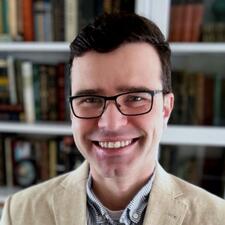
Piercen Oliver, PhD
Vice President of Research and Development at Clear Scientific
Piercen Oliver, PhD, is a research chemist and vice president of research and development at Clear Scientific (Greater Boston). He has more than 10 years of industry research experience—the past six years have been dedicated to developing therapeutics to address substance use overdose with Clear Scientific.
During this time, Piercen has directed a team of researchers and advisors to progress an early-stage preclinical drug candidate into a promising clinical candidate for treatment of both simulant and opioid drug overdose. He currently oversees interdisciplinary teams focused on CMC, regulatory, nonclinical, and clinical trial conduct. With strong support from the National Institutes of Drug Abuse (NIDA), Piercen, and the rest of the Clear Scientific team, are committed to finding cutting-edge solutions to address the ongoing drug overdose epidemic.
Piercen received his bachelor’s degree in chemistry from Oglethorpe University and his PhD in physical chemistry from Lehigh University. His postdoctoral research was conducted at the UW Madison Biochemistry Department.
-
Robert Rodriguez, MD
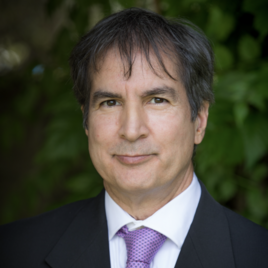
Robert Rodriguez, MD
Professor of Medicine and Associate Dean of Clinical Research at the UC Riverside School of Medicine
Robert Rodriguez, MD is a professor of Medicine and associate dean of clinical and population health research at the University of California Riverside School of Medicine. After the University of Notre Dame and Harvard Medical School, he completed a combined Emergency Medicine/Internal Medicine residency at UCLA and a Critical Care Medicine fellowship at Stanford.
Rodriguez has published over 175 original research articles, leading national teams examining issues in public health, infectious diseases, trauma, resuscitation, and critical care. Recognizing the pivotal role that emergency departments play as the “safety net of the safety net," much of his research centers on emergency healthcare access for underserved populations. He has received multiple mentoring, humanitarian and scientific awards, including the Unidos US Xcellence in Leadership award, the American College of Emergency Physicians Outstanding Contributions to Research award, the Academy for Diversity and Inclusion in Emergency Medicine (ADIEM) Sheryl Heron, MD, MPH Legacy Award, and the Dr. Martin Luther King Jr. award given annually to a UCSF faculty member who exemplifies the commitment to the service principles of the late civil rights leader.
Rodriguez served as an advisor to the Congressional Hispanic Caucus, the only emergency physician on the Biden/Harris COVID-19 Transition Advisory team, and as a co-author of the book Lessons from the Covid War: An Investigative Report.
-
Steve Shoptaw, PhD
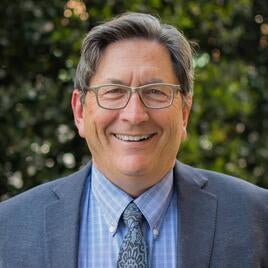
Steve Shoptaw, PhD
Professor & Vice Chair of Research at the University of California, Los Angeles (UCLA)
Steven Shoptaw, PhD is professor emeritus and vice chair for research in the Department of Family Medicine at UCLA where he founded the Center for Behavioral and Addiction Medicine. He co-directs the Big South/West Node of NIDA’s Clinical Trials Network where he leads randomized controlled trials on new medications for stimulant use disorder.
As protocol co-chair for HIV Prevention Trials Network 094, Shoptaw completed a five-city trial of outcomes when delivering peer navigation and integrated HIV and addiction services using mobile medical units compared to peer navigation to available resources alone for out-of-treatment people who inject drugs. These science platforms provide opportunities for Steve to mentor medical students, graduate students, medical fellows, postdoctoral scholars, junior and mid-career faculty interested in conducting clinical and community research in addiction and HIV.
Shoptaw provides service to science including being prior editor-in-chief for drug and alcohol dependence, a leading journal for addiction science. Shoptaw works internationally in Vietnam, South Africa, Cameroon, and Australia on medication development trials and promotes testing and scaling up of addiction treatments in low- and middle-income countries.
-
Roham T. Zamanian, MD, FCCP
Roham T. Zamanian, MD, FCCP
Professor & Director of the Department of Pulmonary Vascular Medicine, Adult Pulmonary Hypertension Service at the Stanford University School of Medicine
Law Enforcement and Community Partners
-
Zoe Grover - Police Assisted Addiction and Recovery Initiative (PAARI)
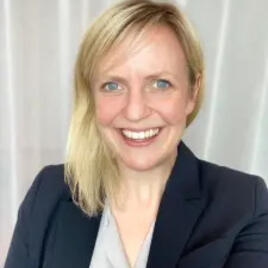
Zoe Grover
Executive director of the Police Assisted Addiction and Recovery Initiative (PAARI)
Zoe Grover is the executive director of the Police Assisted Addiction and Recovery Initiative. Prior to serving in that role, she worked in the nonprofit public health sector for nearly a decade. She has a successful track record in policy advocacy, serving as a lead advocate for Massachusetts’ bipartisan comprehensive gun legislation of 2014, 2017 and 2018. She has extensive experience in organizing, public awareness and communications. She served as a principal organizer for the Concert Across America to End Gun Violence, a nationwide event which included over 350 events and 5000 performers in its first year. She was a founding board member of the Police Assisted Addiction and Recovery Initiative and currently serves on the board of the States United to Prevent Gun Violence. She attended law school at Lewis And Clark Law School and received her bachelors from the University of Oregon. Most recently she received a graduate certificate in nonprofit management from Harvard.
About the Presentation
The Police Assisted Addiction and Recovery Initiative (PAARI) will provide an overview of deflection, a proactive model that empowers law enforcement and public to redirect individuals away from the justice system and toward community-based behavioral health services. This presentation will specifically address the growing complexities of the stimulant crisis, highlighting how non-arrest pathways can more effectively manage the unique behavioral and medical needs of those using substances like methamphetamine and cocaine. Audience members will leave with actionable steps for planning and implementing deflection programs and addressing the issues in their communities.
-
Brittney Garrett - Police Assisted Addiction and Recovery Initiative (PAARI)
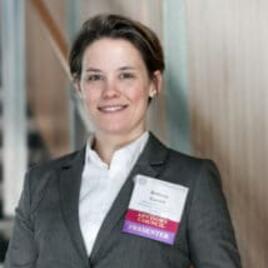
Brittney Garrett
Senior Director of Public Safety Training & Engagement at the Police Assisted Addiction & Recovery Initiative (PAARI)
Brittney Garrett, a nationally recognized subject matter expert in the field of police and public safety deflection/diversion, is the senior director of public safety training & engagement at the Police Assisted Addiction & Recovery Initiative (PAARI). Brittney has more than 14 years of law enforcement experience and six years of executive leadership experience. Prior to joining PAARI, Brittney served as the administrative commander/major for the Jeffersontown Police Department in Kentucky. Preceding this role, she worked the beginning of her career as a patrol officer and later as an administrative sergeant.
In 2016, Brittney developed the first Angel Program in Kentucky at the Jeffersontown Police Department. This innovative program was modeled after the original Gloucester program to connect persons struggling with addiction to treatment resources in lieu of arrest. Since this program’s beginning, the model has spread across Kentucky to all state police posts and numerous police departments. The success of this program and the continued need to help those suffering from addiction and mental illness led to the expansion of victim services to a community resource unit, including an additional social services worker to provide broader services to the community.
Brittney has presented at numerous national conferences and events, including the US Senate Opioid Roundtable, the Police Executive Research Forum (PERF) Conference on Responding to the Opioid Epidemic, the Rx and Illicit Drug Summit, the PAARI Law Enforcement Summit, the Cocaine, Meth & Stimulant Summit, Police Treatment and Community Collaborative (PTACC) Summit, the Overdose Response Strategy (ORS) Conference, and the IACP DAID Conference.
Brittney previously served as a member of the National Police Council for the Police Assisted Addiction Recovery Initiative (PAARI) and on the VAWA Implementation Plan Planning Committee for the state of Kentucky. She also contributed as a subject matter expert to the SAMHSA’s “Connecting Communities to Substance Use Services: Practical Approaches for First Responders” guide in 2023. Additionally, Brittney has received a PAARI Leadership Award, the Jeffersontown Police Officer of the Year Award, and a Louisville KY Business First Forty Under 40 award.
Brittney received her bachelor’s degree in justice administration from the University of Louisville and her master’s degree in organizational leadership from Colorado State University-Global Campus. She is a Prosci-Certified Change Practitioner and has received additional certificates from the Kentucky Department of Criminal Justice Training (DOCJT) Academy of Police Supervision, the DOCJT Criminal Justice Executive Development Course, and 200-hour Power Yoga Teacher Training.